

3.3 Types of assessment

As an Exeter student, your achievement of learning objectives within modules will be measured via a variety of different assessment types. On some programmes, the majority of assessments will be by exam. In contrast, on others, you’ll be asked to complete a range of alternative assignments, some of which may involve group work. We are diversifying the way we assess our students, and you may find that you have the opportunity to demonstrate your achievement in non-conventional formats.
The University has adopted a policy that all students should receive feedback on all assessments within three weeks in university term-time. Assessment schedules should be taken into account to ensure that you will have the opportunity to make improvements in future assessments on the basis of the feedback provided.
Let’s take a look at some of the commonly used assessment types across our modules:
Exams
Some of you will be very familiar with exams, while others may not have done an exam for a few years. We offer many opportunities to work on exam techniques. If you experience exam-related anxiety, our well-being teams can provide all sorts of ways to help with this, so don’t be afraid to seek support. This may be in written or in person in nature.
Reports
Reports can take many different formats depending on the requirements of the assignment. Still, they usually require independent research on a topic or case study. The report will be written in sections (rather than the continuous prose of an essay) and often contain data presented as tables or graphics to back up your analysis and conclusions.
Presentations
You will be required to prepare and deliver presentations, either individually or as part of a small group. Many students feel nervous about presenting to an audience for the first time, but with practice, this becomes one of the most important ways to develop the confidence in public speaking that many future employers will be looking for. Sometimes, you’ll be asked to pre-record a presentation, which may feel less intimidating and allows you to develop your digital skills.
Essays
Some of our students arrive with lots of experience in writing essays, while others have almost none. Even if you are familiar with the format, you might have questions about what we expect in an essay. You might be particularly worried about how to tackle referencing and how to integrate the critical approach that attracts high grades. Through your modules, you’ll be directed towards guides and workshops to help you understand how to confidently approach essay writing. The same guidance you probably received at school or college still applies - the essential features of a good essay are structure, argument, logic and a firm conclusion. How you find information sources as you do your research might be different, and how you use them as evidence to support your ideas and analysis. To get good marks, you’ll need to go beyond the description of a problem or issue. We’re looking for you to answer a question by analysing and evaluating different approaches, comparing alternative viewpoints, and then reaching your own conclusions.
As in other types of assignments, you’ll need to acknowledge these sources via proper referencing in an essay. Through your modules, you will be taught the appropriate way to reference in your discipline. You can read more about referencing here
Other assessments
Sometimes a module will have a more unique approach to assessment, with less conventional formats via which you can demonstrate your achievement of the module’s intended learning objectives. For these, you are more likely to emphasise developing skills than learning ‘content’. This can also allow those who dislike the pressure of traditional exams to choose optional modules where the assessment mode better suits your needs.
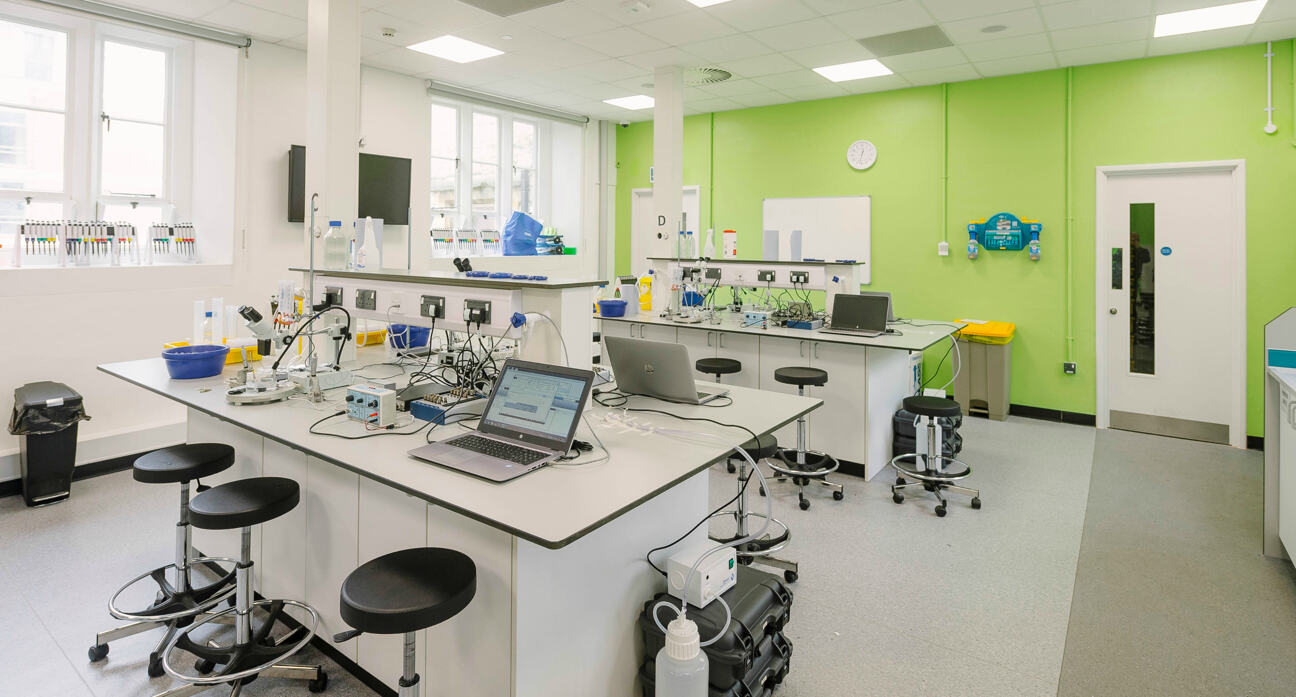
The Medical School invested in a state-of-the-art teaching laboratory for its Medical Sciences programmes.
The laboratory contains a range of standard equipment you’d expect to see within a modern teaching laboratory as well as some more specialist equipment such as a fluorescent microscope, physiological activity recording setups, close-circuit video recording and streaming system for teaching, and tissue culture facilities.
The laboratory sessions are specifically designed to be well integrated and underpin the theory studied within the core modules, helping students to apply their learning as well as learn modern research techniques and develop their transferrable skills relevant to their future post-graduate professional training either in academia or within the knowledge industry.
Any questions?
Now use the comments section below to ask any questions you might have about tackling different types of assessment – staff are on hand in the comments section to be able to give you insights into how all of these work in practice!